

Enterprise AI Trends 2026: The Executive Guide to Scalable AI
Executive Summary
Artificial intelligence is no longer sitting in innovation labs or limited pilot programs. In 2026, it is becoming part of the operational backbone of modern enterprises. The conversation has shifted from “Should we use AI?” to “How do we implement it responsibly and at scale?”
For business leaders, the opportunity is significant. AI is improving operational efficiency, accelerating decision-making, reducing risk, and unlocking new revenue models. However, the competitive advantage does not come from experimenting with isolated tools. It comes from building intelligent systems that integrate deeply into business processes.
This article explores the most important enterprise AI trends shaping 2026 and explains what executives should prioritize now to stay ahead.
1. The Shift from Automation to Autonomous Systems
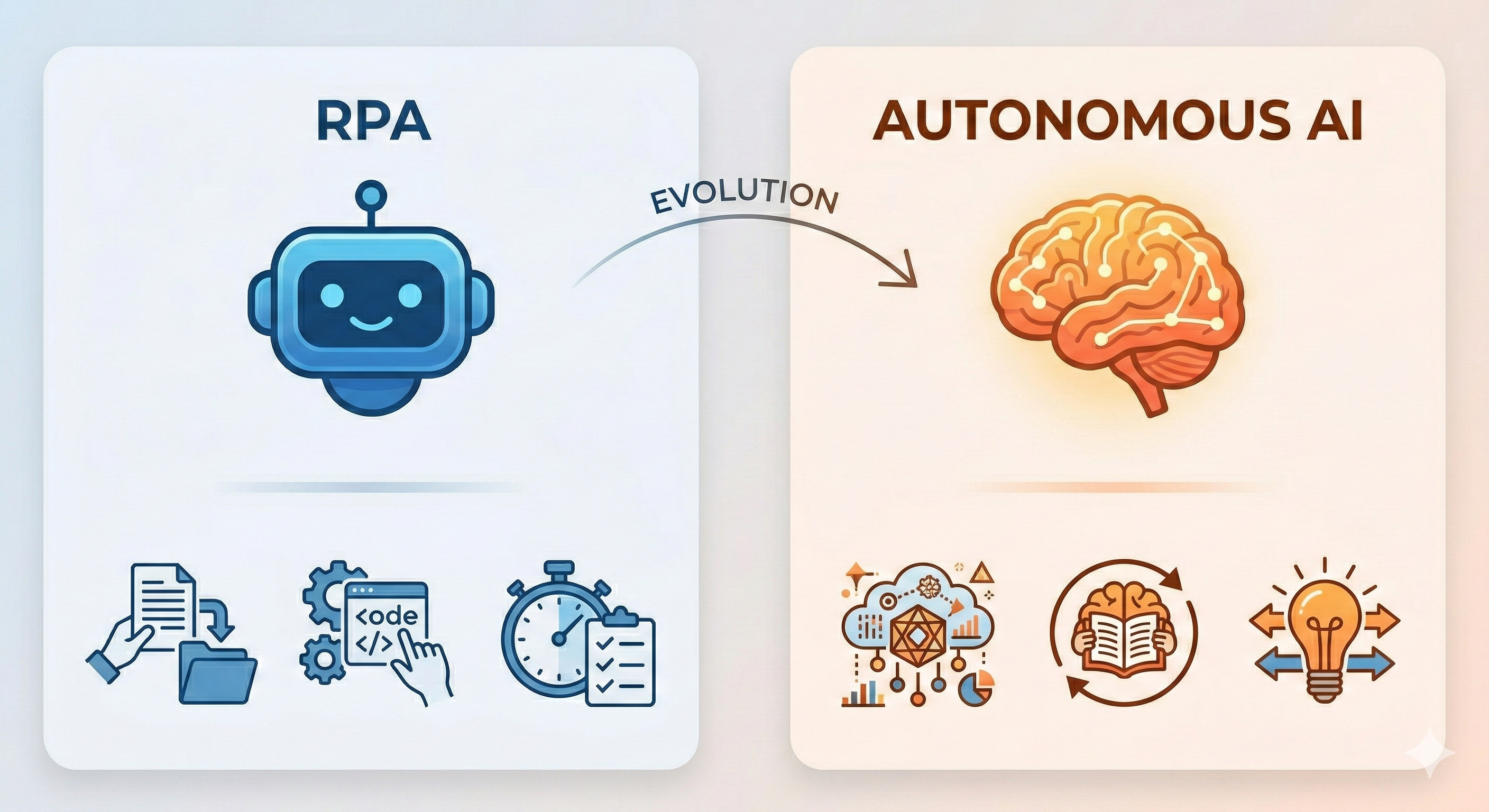
Over the past decade, many enterprises adopted robotic process automation to handle repetitive tasks. These systems followed predefined rules and worked well in structured environments. However, they struggled when conditions changed or when decisions required contextual judgment.
In 2026, organizations are moving beyond simple task automation toward autonomous systems that can analyze context, reason through multi-step processes, and adapt in real time.
Traditional automation focuses on executing instructions. Autonomous AI systems focus on achieving outcomes.
For example, instead of merely extracting invoice data, a modern AI system can identify anomalies, assess potential compliance risks, recommend next steps, and initiate follow-up workflows automatically. This shift fundamentally changes how operations are managed.
Autonomy is becoming a defining feature of enterprise AI maturity.
2. AI Agents Becoming Core Business Infrastructure
AI agents are emerging as foundational components inside enterprise environments. Unlike basic chat interfaces, enterprise-grade AI agents are capable of understanding goals, breaking them into smaller actions, retrieving relevant data, and executing decisions across multiple systems.
A typical enterprise AI agent operates through four essential layers:
First, an input layer gathers structured and unstructured data from internal systems.
Second, a reasoning engine analyzes the context and determines the appropriate actions.
Third, memory systems store and retrieve contextual knowledge so that decisions remain consistent over time.
Finally, an execution layer interacts with APIs, automation platforms, and enterprise tools to carry out tasks.
This architecture allows AI agents to support departments such as finance, human resources, operations, and customer experience.
In finance, they assist with fraud monitoring and risk analysis. In HR, they streamline candidate evaluation and workforce insights. In operations, they optimize supply chains and monitor performance metrics. In customer service, they coordinate personalized responses at scale.
AI agents are not replacing leadership or strategic thinking. They are enhancing the speed and precision of execution.
3. AI-Native Infrastructure and Scalable Architecture
One of the most important enterprise AI trends in 2026 is the recognition that infrastructure determines long-term success.
Organizations that treat AI as an add-on feature often struggle with performance, latency, and integration challenges. By contrast, companies that design AI-native architecture from the ground up are able to scale more effectively.
A modern enterprise AI architecture typically consists of three interconnected layers.
The data layer manages ingestion pipelines, secure storage, and semantic indexing systems such as vector databases.
The intelligence layer includes large language models, domain-specific models, orchestration frameworks, and decision engines.
The execution layer ensures reliable deployment through containerized environments, high-throughput APIs, and secure runtime systems.
When these layers are properly integrated, organizations benefit from improved reliability, lower latency, easier model updates, and stronger security controls.
Infrastructure is no longer a technical afterthought. It is a strategic investment.
4. AI Governance and Regulatory Acceleration
As AI adoption increases, regulatory attention is rising across industries. In 2026, governance is no longer optional. It is a core component of enterprise strategy.
Leaders must address data privacy, model bias, transparency, audit readiness, and risk management. Clear policies and documentation are becoming essential, particularly in regulated sectors such as finance and healthcare.
Organizations that invest early in governance frameworks often move faster in the long run. They reduce legal exposure, strengthen stakeholder trust, and create sustainable AI programs.
Governance should not be viewed as a barrier to innovation. Instead, it provides the structure that allows innovation to scale responsibly.
5. Multimodal and Context-Aware AI Systems
Enterprise AI systems are no longer limited to text analysis. In 2026, multimodal intelligence is gaining traction. Modern systems combine text, images, structured data, voice inputs, and even real-time sensor data.
Context-aware systems rely on semantic retrieval and memory frameworks to deliver more accurate and relevant outputs. Rather than generating generic responses, they draw from enterprise knowledge bases and live operational data.
This evolution improves performance across many industries. Financial institutions gain stronger anomaly detection. Healthcare providers enhance diagnostic workflows. Manufacturers benefit from predictive monitoring. Retailers improve personalization and inventory planning.
The ability to understand context across multiple data types significantly expands the practical value of AI.
6. Industry Adoption Is Accelerating
Enterprise AI adoption is expanding rapidly across major industries.
In finance, organizations are strengthening fraud detection, automating compliance reporting, and improving risk modeling.
In healthcare, AI supports diagnostic workflows, patient record automation, and predictive care planning.
In manufacturing, predictive maintenance and quality inspection systems reduce downtime and operational costs.
In retail, demand forecasting and personalization engines improve customer retention and profit margins.
AI is no longer confined to technology companies. It is becoming embedded in core operational environments across sectors.
7. What CTOs and CIOs Should Prioritize in 2026
To remain competitive, enterprise leaders should focus on several key priorities.
First, conduct a comprehensive AI readiness assessment. Understand data maturity, infrastructure capability, and organizational alignment.
Second, invest in scalable architecture rather than temporary solutions.
Third, establish governance frameworks early to manage compliance and risk.
Fourth, develop internal talent and cross-functional AI literacy.
Finally, build partnerships that accelerate deployment while maintaining control over core systems.
Strategic discipline in these areas will determine long-term success.
8. Preparing for 2027 and Beyond
Looking ahead, enterprises are moving toward self-optimizing ecosystems. AI systems will continuously monitor performance, identify inefficiencies, and recommend or execute improvements with minimal human intervention.
The organizations that begin building strong foundations in 2026 will be better positioned to operate in increasingly autonomous environments.
AI is evolving from a supportive tool into an operational intelligence layer that spans departments and functions.
Frequently Asked Questions
What are the biggest enterprise AI trends in 2026?
The most significant trends include autonomous AI agents, scalable infrastructure design, governance-first implementation, multimodal intelligence, and widespread industry adoption.
How are AI agents used in business?
AI agents automate complex workflows, retrieve contextual data, perform multi-step reasoning, and interact with enterprise systems to improve operational efficiency.
Is AI automation replacing traditional RPA?
Many organizations are transitioning from rigid rule-based automation to intelligent systems that can reason and adapt. While RPA still has value, AI-driven automation offers greater flexibility.
What infrastructure is required for enterprise AI?
Enterprises need secure data pipelines, semantic indexing systems, orchestration frameworks, reliable APIs, and containerized deployment environments.
How should companies prepare for AI governance?
Organizations should implement data privacy controls, bias monitoring processes, documentation standards, and internal oversight policies from the start of their AI initiatives.
Conclusion
Enterprise AI in 2026 represents a structural transformation rather than a simple technological upgrade. Companies that invest in autonomous systems, scalable architecture, and responsible governance will gain sustainable competitive advantages.
AI is becoming part of enterprise infrastructure. Leaders who take a deliberate and strategic approach today will define the competitive landscape of tomorrow.
Tagged in